Commercial Rooftop HVAC Services
Rooftop HVAC Service for the Spaces Below
Many light commercial buildings use packaged rooftop units, often called RTUs, that combine major system components in one cabinet on the roof and distribute conditioned air through ductwork. Your rooftop equipment needs to keep pace with your building’s occupied hours, changing temperatures, and daily heating and cooling demands.
Mark Hill works on light commercial rooftop HVAC systems as part of our commercial HVAC services. When performance slips, we evaluate the equipment and explain what comes next.
Our services focus on light commercial heating and cooling equipment. We do not service boilers or chillers.
- 01
Rooftop Unit Installation
Equipment selected for your building’s heating, cooling, and airflow needs, planned around existing connections, roof access, and your operating requirements.
- 02
Rooftop HVAC Repair
Warm air, weak airflow, unusual noises, short cycling, or a unit that will not start. We inspect the equipment, identify the problem, and explain the recommended repairs before moving forward.
- 03
Rooftop HVAC Maintenance
Planned maintenance addresses routine service needs, identifies developing problems, and supports dependable heating and cooling through changing seasons.
- 04
Rooftop Unit Replacement
When repairs add up and performance declines, we help you compare repair and replacement options based on your building’s needs, equipment compatibility, and budget. See how a replacement lift works
Installation & Replacement Day
Rooftop Unit Replacement & Crane Lifts
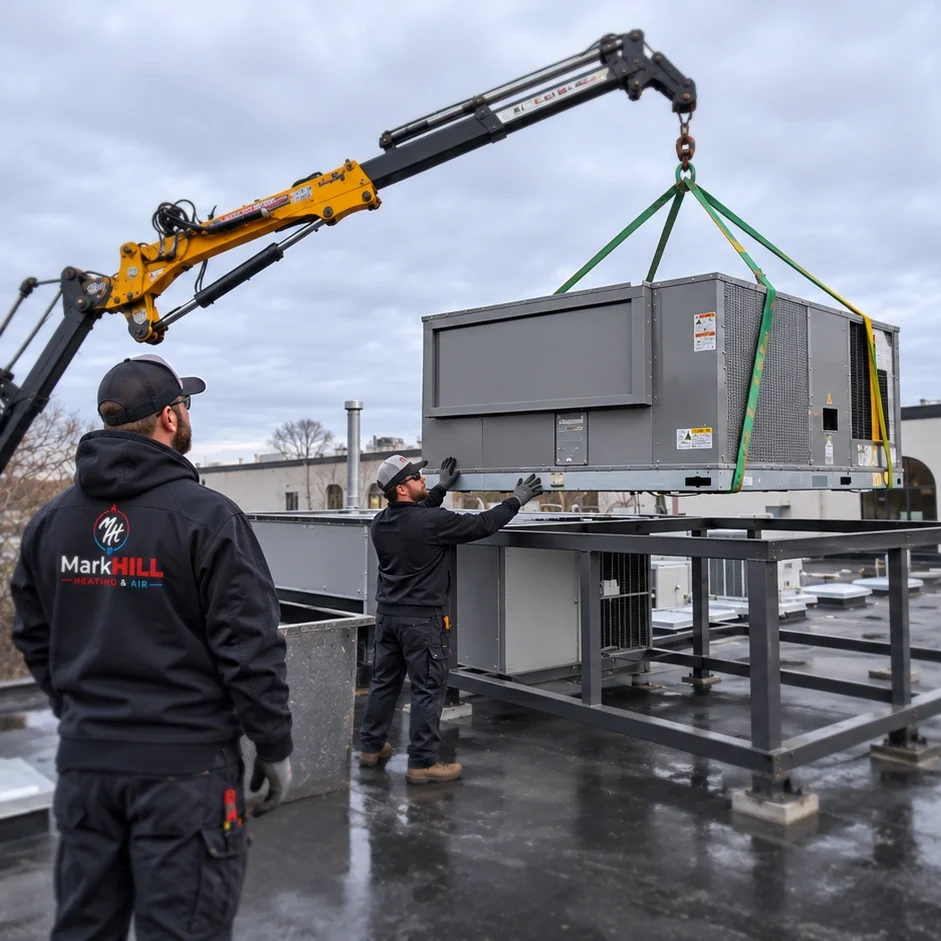
Rooftop units are too large and heavy to carry up by hand, so new installations and replacements are typically set with a crane. A smooth lift depends on planning that happens well before the crane arrives—confirming the new unit fits the existing setup, choosing where the crane can set up, and timing the work around your business.
- 01
Evaluate the Existing Setup
Equipment dimensions, the roof curb, duct connections, electrical supply, fuel connections, and controls all affect the replacement plan and which unit fits.
- 02
Plan the Crane Lift
We work out where the crane can set up, how the site will be accessed, and when the lift fits around your occupied hours and building requirements.
- 03
Lift Out & Set the New Unit
The old unit is disconnected and lifted off the roof, and the new rooftop unit is set into place on the curb.
- 04
Connect & Start Up
The unit is connected to ductwork, power, fuel, and controls, then started and checked for proper heating and cooling operation.
What to expect: The system being replaced will be unavailable during part of the work. We discuss timing, access, and expected interruptions with you when planning the replacement.
Know the Warning Signs
Signs Your Rooftop Unit Needs Repair
You don’t need to see your rooftop unit to know it may need attention. If your business has lost heating or cooling, call Mark Hill to discuss the problem and current service availability.
- Air that does not reach the expected temperature
- Weak airflow from supply vents
- Persistent hot or cold areas
- Equipment that starts and stops frequently
- New rattling, grinding, or other unusual sounds
- Water leaks or moisture near indoor vents
- An unexplained increase in energy use
- A system that runs continuously or will not start
Frequently Asked Questions
Commercial Rooftop HVAC FAQs
Quick answers about crane lifts, rooftop unit replacement, maintenance, and what to share when you call.
Do you need a crane to replace a rooftop unit?
In most cases, yes. Because of their size and weight, rooftop units are typically lifted on and off the roof with a crane. The crane setup depends on the unit, the building, and site access, so the lift is planned as part of the installation or replacement project.
Can a replacement rooftop unit use the existing setup?
Sometimes, but we need to evaluate compatibility. Equipment dimensions, the roof curb, duct connections, electrical supply, fuel connections, and controls can affect the replacement plan. Select a new unit based on the building’s needs and installation requirements.
Should I repair or replace my commercial rooftop unit?
The right choice depends on the unit’s condition, repair history, performance, and the cost of the proposed work. Recurring breakdowns, deteriorating components, and ongoing comfort problems may make replacement worth considering. We evaluate the equipment and explain your options.
How often does rooftop HVAC equipment need maintenance?
The right schedule depends on manufacturer recommendations, operating hours, equipment condition, and the building’s environment. Systems serving businesses with long occupied hours or greater exposure to dust and debris may need more frequent attention. We can discuss a schedule suited to your equipment.
What information should I provide when scheduling service?
Provide your business address, a description of the problem, and any available equipment details, such as the brand, model, approximate age, or number of units. Let us know about roof-access procedures or building-management requirements. You do not need to access the roof to gather this information.
Does Mark Hill service boilers or chillers?
No. Mark Hill’s commercial services focus on light commercial heating and cooling equipment, including rooftop HVAC systems. We do not service boilers or chillers.
Put Your Rooftop HVAC in Good Hands
Whether your rooftop unit needs repair, routine maintenance, or a replacement plan, Mark Hill is ready to help. We provide light commercial rooftop HVAC service in Tulsa, Broken Arrow, Bixby, Jenks, Owasso, Catoosa, Claremore, Coweta, and surrounding communities.
Tell us about your building, your equipment, and what you need.